
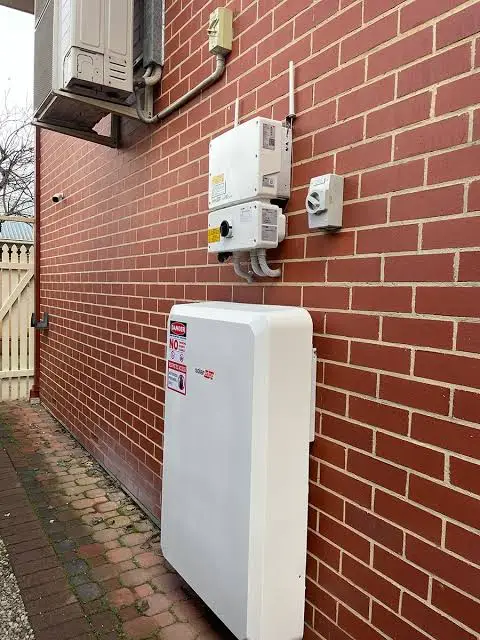
Homeowners can easily add battery storage for solar in the Greater Sacramento area to capture excess daytime energy, avoid peak evening utility rates, and keep power running during grid outages. According to the Sacramento Municipal Utility District (SMUD), existing solar customers do not pay an additional interconnection fee when retrofitting a battery, though local building permits and an electrical evaluation are required. With the right setup, a home battery transforms standard rooftop panels into a reliable, around-the-clock power source.
Why Homeowners Add Battery Storage to Existing Solar Panels
When you first installed solar panels, your system was likely designed to send extra daytime electricity straight back to the utility grid. Without a battery, however, standard grid-tied solar panels automatically shut down during a power outage to protect utility workers repairing the lines. That means even on a sunny afternoon in Rancho Cordova or Sacramento, a grid failure leaves your home in the dark.
Installing home battery backup installation solves this problem by creating an independent energy reserve right on your property. Instead of exporting all your midday solar power for modest credits, your system stores that clean energy on-site. You can then use your stored solar power in the late afternoon and evening when utility electricity is most expensive, or save it for unexpected blackouts.
Homeowners across the region typically retrofit a battery for three main reasons:
- Backup power during outages: Keep your refrigerator, medical equipment, Wi-Fi, lighting, and garage doors working when winter storms or summer heatwaves knock out the local grid.
- Time-of-use bill savings: Draw from your battery between 5 p.m. and 8 p.m. when utility rates spike, rather than buying costly peak-hour power.
- Greater energy independence: Maximize the value of the rooftop solar panels you have already paid for by consuming more of your own clean electricity.
Understanding SMUD Rules and Interconnection Fees
Before installing a battery in Sacramento County, it is important to understand how your local utility handles grid connections and billing. Every battery system that connects to a home with utility power must go through an official interconnection review to ensure it operates safely with the neighborhood grid.
According to the SMUD homeowner battery storage guidelines, customers who add battery storage to an existing solar system do not have to pay an additional interconnection fee. Conversely, SMUD charges a one-time interconnection fee for brand-new solar-plus-storage installations or standalone battery systems. This fee exemption makes retrofitting a battery onto an older solar array a very straightforward step for existing solar owners.
You should also check how adding storage affects your billing plan. As outlined in the SMUD solar customer resource guide, rate structures and export credits may vary depending on your current net-energy-metering (NEM) plan. Reviewing your specific rate schedule ahead of time helps you program your battery software for the best daily savings.
How Battery Retrofits Connect to Your Existing Solar System
Not all solar panels and inverters are wired the same way, so a licensed electrician will inspect your current setup to recommend the right coupling method. In residential retrofits, technicians generally use either AC-coupled or DC-coupled configurations.
AC-Coupled Battery Systems
AC coupling is the most common approach when adding a battery to an existing solar array, especially if your panels use microinverters. Your rooftop solar panels produce direct current (DC), which your existing inverter converts into alternating current (AC) for your home. An AC-coupled battery uses its own built-in inverter to take that AC power, convert it back to DC for storage, and turn it back into AC when your house needs electricity.
DC-Coupled Battery Systems
In a DC-coupled system, solar power flows directly from the panels into the battery before converting to AC power for your household appliances. While DC coupling requires fewer conversions, setting it up on an existing solar system often means replacing your current string inverter with a new hybrid inverter. For homeowners looking into modern all-in-one units like a Powerwall 3 installation and troubleshooting setup, an electrician can evaluate whether your existing solar wiring pairs best with an AC or DC configuration.
Electrical Panel Capacity and Essential Circuits
Adding a high-capacity battery involves much more than mounting a unit on your garage wall. Because the battery interacts directly with your household wiring and main service panel, your electrical infrastructure must be safe, up to code, and large enough to handle the power transfer.
Older homes in the Greater Sacramento area still operating on 100-amp or 125-amp service panels often run out of breaker space or busbar capacity when adding energy storage. During an on-site visit, an electrician will inspect your main panel, grounding system, and existing solar breaker sizes. If your panel is overloaded or outdated, scheduling main panel upgrades ensures your home can safely manage your solar array, battery storage, and heavy appliances like air conditioners or EV chargers.
Unless you install multiple batteries to back up your entire property, you will also set up a critical load subpanel. This dedicated backup panel isolates the circuits you care about most during a blackout:
- Kitchen essentials: Refrigerators, freezers, and microwave outlets.
- Comfort and safety: Hallway lighting, garage door openers, and security systems.
- Home office gear: Modems, routers, and living area outlets for charging phones and laptops.
- Well pumps or medical devices: Critical life-safety equipment that cannot lose power.
Permitting and Installation Steps in Sacramento County
Because home batteries store significant electrical energy and tie directly into your main service panel, local municipalities strictly regulate how they are installed. According to the Sacramento County Building Permits and Inspection FAQ, the county requires a formal application and building permit for regulated electrical work and alterations. Fire setbacks, clearance rules around windows and doors, and heat detector requirements are also checked during the review process.
When you work with a qualified electrical contractor, the retrofit process follows a clear, step-by-step path:
- Site evaluation and load calculation: An electrician inspects your existing solar equipment, main electrical panel, and wall space in your garage or exterior mounting area.
- System design and engineering: The team designs the wiring diagrams, selects the right battery capacity, and maps out your essential backup circuits.
- Permit and utility applications: Your contractor submits the electrical permit application to Sacramento County or your local city building department, along with the interconnection paperwork for SMUD.
- Professional installation: Electricians mount the battery, install the backup gateway or subpanel, and connect the system to your existing solar wiring.
- Inspection and permission to operate: A local building inspector verifies that the work meets all safety codes, and the utility grants final approval to activate your battery.
Ready to Add Battery Backup to Your Solar System?
If your existing solar panels are working hard during the day, adding a home battery lets you enjoy that clean energy at night and during unexpected grid outages. At Lux Dei Electric, our team helps homeowners in Rancho Cordova, Sacramento, Fairfield, Yuba City, Woodland, and surrounding communities within a 30-mile radius of Sacramento design and install safe, code-compliant energy storage systems. Whether you are expanding your current solar installation or need a complete panel evaluation, we handle the electrical details from start to finish.
We are currently offering 10% off your next project, which you can claim right now through our online discount form. You can also request a customized quote using our project estimate form or call us at (916) 879-2995 Monday through Saturday from 8 a.m. to 6 p.m.
Have we helped with an electrical or solar project at your home recently? We would love to hear about your experience on our Google review page or through our customer feedback page. For tips and recent local projects, follow us on Facebook and Instagram.
Frequently Asked Questions
Does SMUD charge an interconnection fee to add a battery to existing solar?
No, SMUD does not charge an additional interconnection fee when customers add battery storage to an existing solar system. However, a one-time interconnection fee does apply to brand-new solar-plus-storage installations or standalone battery systems.
Do I need a building permit to install a solar battery in Sacramento County?
Yes, Sacramento County and neighboring cities require an application, plan review, and electrical permit for regulated electrical alterations, including home battery storage installations. A final inspection is also required before turning the system on.
Can any existing solar panel system have a battery added to it?
Most existing grid-tied solar systems can be retrofitted with battery storage using an AC-coupled setup, which works alongside your current microinverters or string inverter. An electrician can inspect your solar equipment to confirm compatibility and make sure your existing components are working properly.
Will one battery power my entire home during a blackout?
A single battery is usually set up to power essential circuits like your refrigerator, lights, Wi-Fi, and key outlets through a backup subpanel. If you want to run large 240-volt appliances like central air conditioning, electric ranges, or EV chargers during an outage, you may need multiple batteries and a main panel upgrade.