
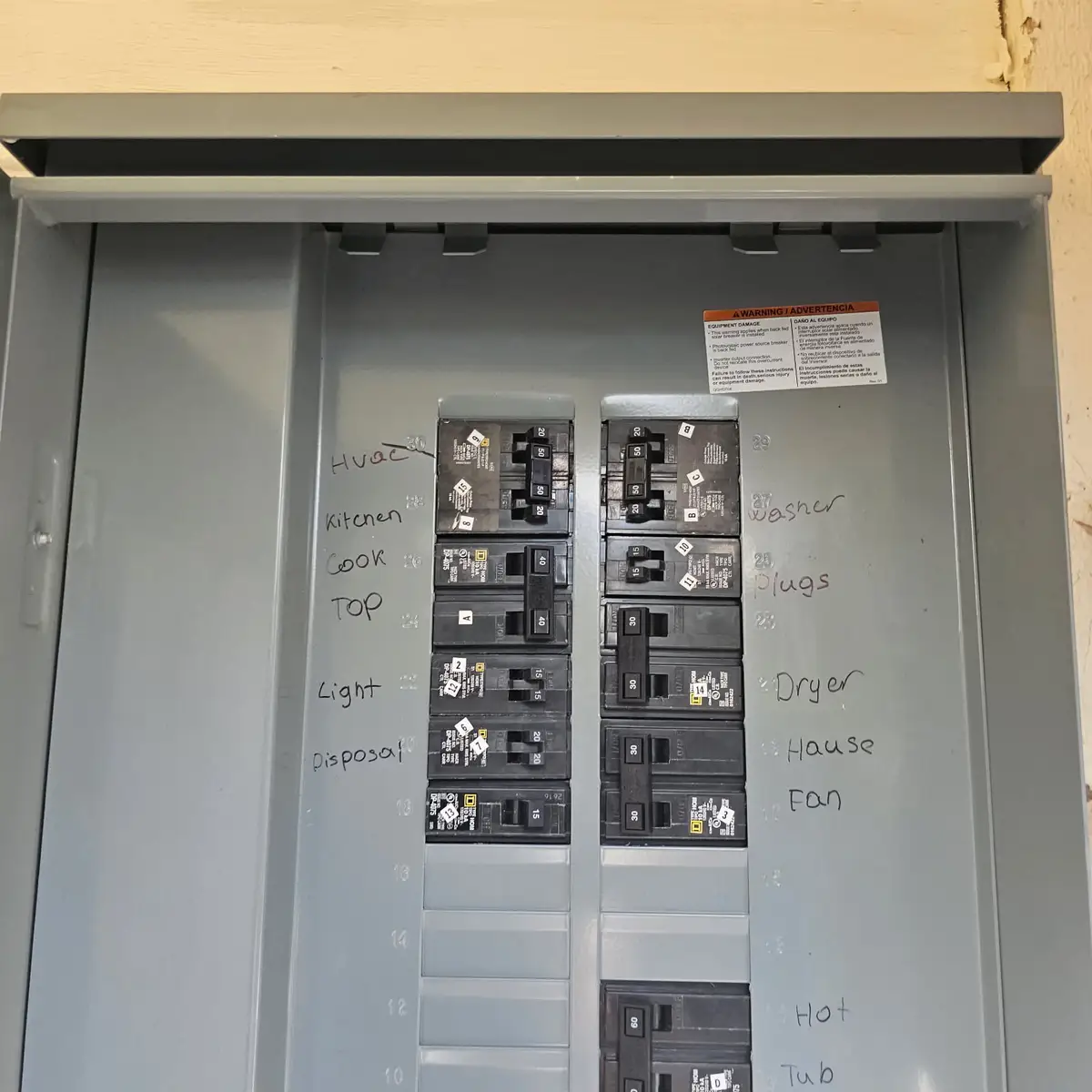
If your lights flicker when the air conditioner turns on in Rancho Cordova, CA, it is usually caused by a temporary voltage drop from the AC compressor drawing a heavy surge of power. While a brief, barely noticeable dip can be normal, repeated or severe flickering often points to an overloaded electrical panel, a failing AC capacitor, or loose wiring connections that require professional attention. Addressing these symptoms early protects your cooling equipment and keeps your home safe from electrical hazards.
Why Your Lights Flicker When the AC Starts in Rancho Cordova, CA
Summer afternoons in the Sacramento Valley put serious demand on your home electrical system. As SMUD points out, heavy air conditioner use drives up electricity consumption during hot regional summers. When your central air conditioner cycles on to beat the heat, its compressor motor demands a large burst of electricity known as inrush current.
This sudden startup surge can temporarily pull voltage away from other circuits in your house, causing overhead fixtures and lamps to dim for a split second. However, if your lights dim noticeably, stay dim while the unit runs, or strobe repeatedly, your home is telling you that something in the electrical supply or the AC unit itself is struggling to keep up.
Common reasons for this issue in local homes include:
- Aging or undersized electrical panels that cannot smoothly handle modern summer cooling loads alongside everyday appliances.
- Loose wire connections inside the breaker box, at the light switch, or along the neutral bus bar.
- Worn AC capacitors that force the compressor motor to draw extra amperage for a longer period just to get started.
- Shared circuits where lighting or plug-in units are drawing from the same pathway as high-demand equipment.
- Service drop issues between the utility pole or transformer and your home electric meter.
When Flickering Lights Point to a Serious Electrical Hazard
It is easy to brush off a blinking lamp as a minor quirk of an older house, especially in established neighborhoods around Rancho Cordova. Yet the U.S. Consumer Product Safety Commission warns in its CPSC Guide to Home Wiring Hazards that flickering lights can indicate serious home wiring or service-connection issues.
When a wire connection becomes loose over time due to thermal expansion and contraction, electricity has to jump across tiny gaps. This process is called electrical arcing, and it generates intense heat that can melt wire insulation and ignite surrounding materials inside your walls or breaker box.
Loose Neutral Connections
A loose neutral wire is one of the most dangerous causes of fluctuating lights. When your 240-volt air conditioner kicks on, a compromised neutral connection can cause voltage to drop on one side of your electrical panel while spiking dangerously high on the other. If you notice that some lights get brighter when the AC starts while others go dim, you likely have a loose neutral that needs immediate professional electrical troubleshooting.
Overloaded Panels and Outdated Breakers
Many older homes in the area were built with 100-amp electrical panels designed for a time when families had fewer electronics and smaller cooling systems. Today, running a central AC unit while cooking dinner, doing laundry, or charging an electric vehicle can push an older panel past its safe capacity. If your panel cannot deliver steady power during peak summer hours, scheduling one of our main panel upgrades is the safest way to stabilize your home voltage.
Safe Checks Homeowners Can Do Before Calling an Electrician
Before you pick up the phone, you can safely gather a few clues to help your electrician pinpoint the problem faster. You do not need to open any electrical boxes or touch any wiring to perform these basic observations.
- Check your light bulbs: Tighten any loose bulbs and note whether the flickering happens with LEDs, incandescent bulbs, or both. Some older dimmer switches do not pair well with modern LED bulbs and will flicker at the slightest voltage dip.
- Observe which rooms are affected: Pay attention to whether the dimming happens only in one room or across the entire house when the thermostat clicks on. Whole-house dimming usually points to the main panel, the AC unit, or the utility line.
- Listen to your outdoor AC condenser: Stand near your outside unit when it starts up. If it makes a loud humming, clicking, or chattering noise before roaring to life, its start capacitor may be failing and pulling excessive power from your house.
- Look for other warning signs: Check near your breaker panel for buzzing sounds, warm cover plates, tripped breakers, or a faint burning or fishy plastic smell.
If you spot any of the warning signs in step four, turn off your air conditioner at the thermostat and have a licensed technician perform a thorough electrical inspection right away.
How a Local Electrician Fixes AC-Related Voltage Drops
When you call a licensed electrician in Rancho Cordova, CA, the goal is to test the entire path of electricity from your utility meter down to the individual circuits. Guesswork does not solve electrical problems; accurate load testing does.
Here is how an experienced electrician tracks down and resolves the issue:
- Amperage and voltage testing: Using specialized meters, the electrician measures the exact inrush current your air conditioner draws at startup and checks how much the voltage drops at the main panel.
- Thermal imaging and torque checks: Inspecting the main breaker box for hot spots and tightening all terminal screws, bus bar connections, and neutral wires to manufacturer specifications.
- Dedicated circuit evaluation: Verifying that your HVAC equipment is on properly sized wiring and breakers, or providing a new dedicated circuit installation if a window or mini-split unit is overloading a household branch circuit.
- Utility coordination: If testing shows the voltage drop is coming from the street side of your meter, your electrician can document the readings so your utility provider can repair their service drop.
Permits and Electrical Safety in Sacramento County
Whenever troubleshooting reveals that you need a new breaker box, a subpanel, or new circuit wiring, following local building codes is essential. Sacramento County mandates permits for regulated electrical alterations and repairs, requiring confirmation with local authorities prior to starting work. You can review the local rules directly on the Sacramento County Building Permits and Inspection FAQ page.
Working with a qualified local contractor ensures that any panel upgrade or wiring repair is properly permitted and inspected. If you want to learn more about how local homes handle modern power demands, read our guide on evaluating electrical panel capacity in Rancho Cordova, CA.
Frequently Asked Questions
Is it normal for lights to dim briefly when the AC turns on?
A tiny, split-second dip in brightness can happen because the AC compressor draws a brief surge of power at startup. However, if the lights dim noticeably, flicker for several seconds, or dim every time any large appliance runs, you should have an electrician inspect your panel and wiring.
Can flickering lights damage my air conditioner or appliances?
Yes, frequent voltage drops and power surges caused by loose connections can shorten the lifespan of sensitive electronics, smart thermostats, refrigerator motors, and your AC compressor. Fixing the root electrical problem protects both your wiring and your appliances.
Should I call an electrician or an HVAC technician first?
If the flickering affects multiple rooms, is accompanied by buzzing at the breaker panel, or happens when other appliances like the microwave or dryer turn on, call an electrician first. If your lights only dip when the AC starts and the outdoor unit is struggling to blow cold air, an electrician can test the circuit load and let you know if the AC capacitor is the culprit.
How can I schedule an electrical inspection in Rancho Cordova?
Lux Dei Electric is here to help homeowners across Rancho Cordova and the greater Sacramento area Monday through Saturday from 8am to 6pm. You can call us at (916) 879-2995 or visit our contact page to book a visit.
Don't forget that we offer 10% off your next project for local homeowners. You can claim your 10% project discount online, or fill out our service request form to get started. We also love connecting with our neighbors on Facebook and Instagram, and if we have already helped keep your home safe and cool, we invite you to share your experience on our Google review page or through our customer feedback form.