
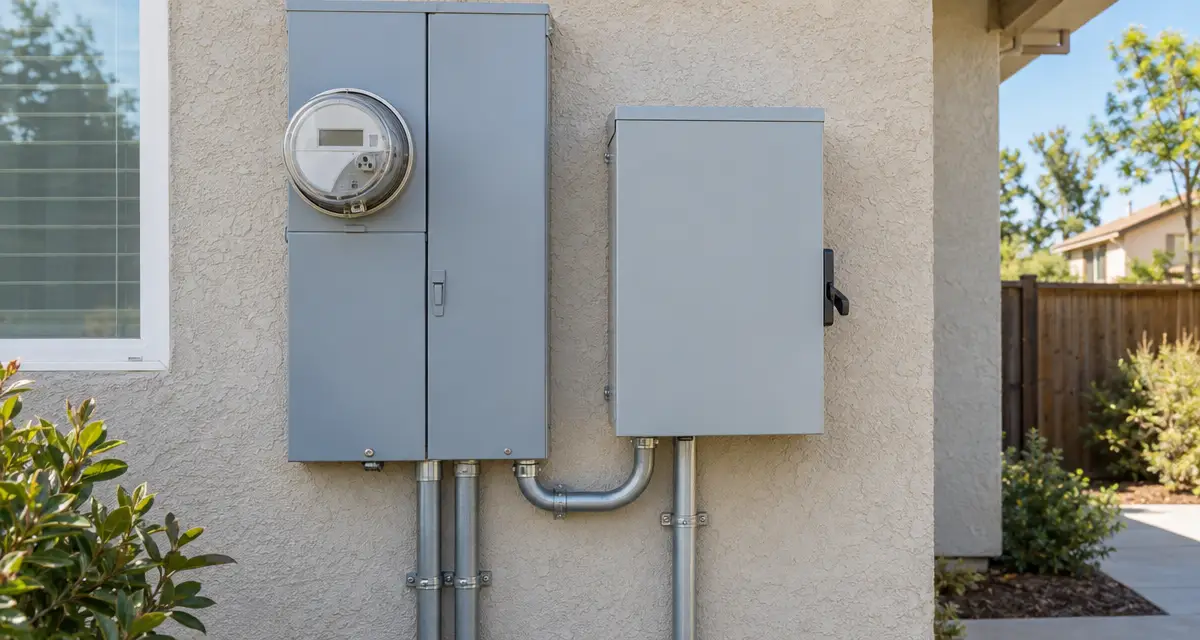
A home generator transfer switch in the Greater Sacramento area safely connects your backup generator to your home's electrical panel so you can run critical appliances during a utility outage without using extension cords. More importantly, it isolates your home from the public utility grid to prevent dangerous electrical backfeeding that could injure line workers or destroy your generator. For local homeowners, installing a transfer switch is the safest and most reliable way to keep the lights, refrigerator, and heating or cooling systems running when severe weather knocks out power.
How a Home Generator Transfer Switch Works
Think of a transfer switch as a secure bridge between two distinct power sources: your normal utility service and your backup generator. Under normal conditions, electricity flows from the utility lines through your electric meter and into your main breaker panel. When a blackout occurs, the transfer switch disconnects your home from the utility lines before allowing power from your generator to enter your house wiring.
Without this physical separation, electricity from your generator would flow in two directions at once. It would power your home circuits while simultaneously traveling backward out through your meter and onto the neighborhood power lines. Once utility crews restore service, a transfer switch also prevents incoming grid electricity from colliding with your running generator, which would cause catastrophic damage to the generator and create a major fire hazard inside your garage or utility area.
Here is what happens step by step when you use a transfer switch during a power outage:
- The utility grid loses power, and your home goes dark.
- The transfer switch disconnects your home's electrical system from the outside utility lines.
- Your portable or standby generator starts up and reaches a stable voltage output.
- The transfer switch routes the generator power directly into your selected home circuits.
- When utility power returns, the switch disconnects the generator and safely reconnects your home to the main grid.
Why SMUD and Local Building Codes Require Transfer Switches
In the Greater Sacramento area, winter storms with heavy rain and high winds frequently topple trees and cause outages across the utility territory. During these severe weather events, the SMUD storm alert center reminds residents to stay away from downed power lines and prepare for extended restoration times. While utility line workers are out in the rain repairing transformers and cables, they rely on those lines being completely de-energized.
If a homeowner connects a generator directly to their home wiring without an isolating device, electricity flows back into the street lines. Step-up transformers on utility poles increase that voltage to lethal levels, putting utility workers and neighbors in extreme danger. Because of this risk, SMUD electrical safety guidelines around the home mandate an approved transfer switch for any permanent standby generator connection to stop backfeeding into the utility grid.
In addition to utility rules, any permanently installed backup generator or transfer switch in the region requires a permit, inspection, and approval by your local city or county building department. Hiring a licensed electrician for professional transfer switch installation ensures that the equipment is properly sized, wired to code, and approved by local inspectors.
Manual vs. Automatic Transfer Switches for Sacramento Homes
Homeowners in the Sacramento region generally choose between two styles of transfer switches depending on their generator type and budget. Both options provide the exact same protection against backfeeding, but they operate differently when the lights go out.
Manual Transfer Switches
A manual transfer switch is typically paired with a portable generator. When an outage happens, you wheel your portable generator outside to a safe, well-ventilated spot away from windows and plug it into an exterior power inlet box mounted on the side of your house. Then, you walk over to your indoor transfer switch subpanel and flip the switch from utility power to generator power.
Manual switches let you choose which specific circuits to energize based on the wattage capacity of your portable unit. You might turn on the kitchen refrigerator and living room lights first, then switch those off briefly if you need to run a well pump or microwave.
Automatic Transfer Switches
An automatic transfer switch (ATS) is the brain behind a permanent standby generator or a whole-home battery system. The ATS constantly monitors the incoming utility voltage from the street. The moment it detects a power outage, it automatically disconnects your home from the grid, signals your standby generator to start, and transfers the electrical load within seconds.
You do not have to go outside in a windstorm with a flashlight or manage extension cords. Whether you are asleep or away on vacation, your heating, air conditioning, security system, and medical equipment stay powered automatically. Some homeowners also pair an automatic switch with home battery backup installation to store solar energy and keep essential circuits running silently without fuel.
Choosing Which Circuits to Power During an Outage
Before installing a transfer switch, it helps to walk through your house and decide what you actually need to run during a winter storm or summer heatwave. A smaller load center transfer switch usually controls 6 to 10 individual circuits, while a whole-house switch works alongside your main panel to power almost everything.
Most homeowners prioritize the following household needs:
- Food preservation: Kitchen refrigerators and standalone garage freezers.
- Climate control: Gas furnace blowers during winter freezes or central air conditioning during summer outages.
- Medical and safety gear: CPAP machines, oxygen concentrators, home security systems, and garage door openers.
- Communication and lighting: Home Wi-Fi routers, home office outlets, and central hallway or kitchen lighting.
- Water supply: Sump pumps in low-lying areas or well pumps on rural properties.
If you want a detailed breakdown of how to calculate your wattage needs, read our guide on choosing essential circuits for backup power in the Greater Sacramento area. During an on-site visit, an electrician will also check your existing breaker box to see if you need any main panel upgrades to safely support a whole-home transfer switch.
Schedule Your Transfer Switch Installation Today
You should never wait until a winter storm is in the forecast to figure out how to hook up your generator. Lux Dei Electric provides code-compliant transfer switch setups for homeowners in Rancho Cordova, CA, Sacramento, Folsom, Roseville, Elk Grove, Fairfield, Woodland, and Yuba City. Our team handles the load calculations, wiring, and inspection requirements so you can have total peace of mind the next time the grid goes down.
If you are ready to set up safe backup power for your home, contact Lux Dei Electric or call us at (916) 879-2995. We are available Monday through Saturday from 8am to 6pm, and you can also claim 10% off your next project through our online form. You can also see examples of our recent residential work on our Facebook page and Instagram profile.
Frequently Asked Questions
Can I plug my portable generator into a dryer outlet instead of using a transfer switch?
No, plugging a generator into a wall or dryer outlet is an illegal and extremely dangerous practice known as backfeeding. It bypasses circuit breakers, creates a severe house fire hazard, and sends lethal voltage back onto utility lines where line workers could be electrocuted.
Do I need a building permit to install a generator transfer switch in Sacramento?
Yes, permanently wired transfer switches and standby generators require an electrical permit and a final inspection from your local city or county building department. Working with a licensed electrician ensures the installation passes inspection and complies with SMUD rules.
Does a portable generator need a transfer switch?
If you only want to run one or two appliances using heavy-duty outdoor extension cords, you do not need a transfer switch. However, if you want your portable generator to power hardwired equipment like your furnace, ceiling lights, or kitchen outlets through your breaker panel, a transfer switch is required.
How long does it take to install a home generator transfer switch?
A standard manual transfer switch and exterior inlet box installation typically takes a licensed electrician a few hours to complete. Automatic transfer switches paired with whole-home standby generators or panel upgrades may take a full day or more depending on the complexity of your electrical panel.